Balkan vs American Dating Culture - Key Differences Every Man Should Know
Key Takeaways
- Balkan dating is marriage-oriented from the start; American dating often prioritizes casual exploration before commitment.
- Family approval plays a central role in Balkan relationships, whereas American couples typically make independent decisions.
- Gender roles follow more traditional complementary patterns in the Balkans compared to egalitarian expectations in the U.S.
- Communication in Balkan dating is direct and emotionally expressive; American dating leans on texting and subtlety.
- Understanding these differences gives American men a real advantage when building connections with Balkan women.
Balkan and American dating cultures operate on fundamentally different assumptions about love, family, and commitment. If you're an American man exploring connections with women from the Balkans, knowing these contrasts isn't just helpful - it's essential for building a genuine, lasting relationship. The Balkans, shaped by centuries of Mediterranean, Slavic, and Ottoman cultural influences, approach romance with a depth and intentionality that often surprises men accustomed to U.S. dating norms. Here's a comprehensive breakdown of every major difference you need to understand in 2026.
Two Worlds of Dating - Understanding the Key Differences
The differences between Balkan and American dating culture run deeper than surface-level etiquette. They reflect distinct philosophies about relationships, family, and what partnership means. The table below captures the most impactful contrasts side by side.
| Aspect | Balkan Culture | American Culture |
|---|---|---|
| Dating Goal | Marriage and long-term commitment from the beginning | Casual dating, exploring options before committing |
| Family Involvement | High - parents and extended family actively participate in partner approval | Low - couples decide independently; families meet later |
| Who Makes the First Move | Men are expected to initiate and pursue | Either gender may initiate; app-based matching is common |
| Pace of Relationship | Intentional and steady; exclusivity comes quickly | Often slow; "talking" and "situationships" may last months |
| Gender Roles | Complementary - men provide, women nurture (with modern flexibility) | Egalitarian expectations; roles are negotiated individually |
| Communication Style | Direct, emotionally expressive, face-to-face preferred | Text-heavy, indirect, often reliant on dating apps |
| Public Displays of Affection | Conservative - subtle hand-holding; PDA varies by country | Generally accepted and common in public settings |
| Paying on Dates | Men pay, especially early on - it's a sign of respect and interest | Often split or alternated; Dutch treat is normalized |
| Dress Code | High effort - women and men dress up for dates, appearance matters greatly | Casual - jeans and t-shirts are standard for most dates |
| Exclusivity | Assumed early; dating multiple people is seen as disloyal | Not assumed until "the talk" - multi-dating is normalized |
| Religion's Role | Significant - Orthodox Christianity, Catholicism, and Islam shape values | Declining influence; religion is often a personal, private matter |
| Social Media in Dating | Used casually; in-person connections are prioritized | Central to modern dating; Instagram, TikTok, Hinge are primary channels |
| Meeting Through Friends | Very common - social circles play a major matchmaking role | Declining; apps have largely replaced organic introductions |
Gender Role Expectations - Complementary vs. Egalitarian
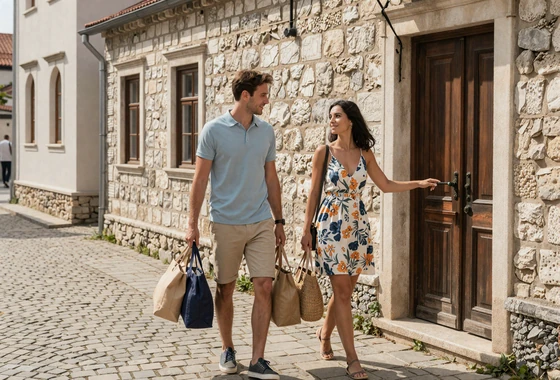
In the Balkans, gender roles tend toward a complementary model. Men are expected to be providers and protectors, while women often take pride in nurturing the home and family. This doesn't mean Balkan women aren't ambitious - many are highly educated professionals. It means the cultural framework values what each partner brings to the relationship differently.
American dating culture has shifted firmly toward egalitarianism. Splitting bills, sharing household tasks equally, and avoiding assumptions about roles are the norm. Neither approach is inherently better, but understanding the difference prevents misunderstandings. When dating Albanian women, for example, showing chivalry and protectiveness is deeply appreciated and signals serious intent.
Communication Styles - Directness vs. Digital Distance
Balkan women generally prefer direct, honest communication. They value face-to-face conversations, phone calls, and video chats over endless text exchanges. If a Balkan woman is interested, you'll know - there's little room for guessing games or mixed signals.
American dating culture, by contrast, has become heavily mediated by technology. Texting is the default communication channel, and the ambiguity of digital messages creates confusion, ghosting, and miscommunication. Men frustrated by this dynamic often find the straightforward Balkan approach refreshing and reassuring.
- Balkan approach: Expects consistent phone calls, direct expressions of interest, and emotional availability
- American approach: Relies on texting, often delays responses strategically, and avoids vulnerability early on
- Key tip: Call instead of text when courting a Balkan woman - she'll interpret it as genuine effort
Pace of Relationships - Intentional vs. Ambiguous
Balkan dating moves with purpose. Once a man and woman begin seeing each other, exclusivity is typically assumed within weeks, not months. There's no "talking stage" or drawn-out ambiguity about where things stand. Dating is viewed as a direct path toward marriage and family.
In the U.S., the path from first date to committed relationship often includes extended periods of uncertainty. Concepts like "situationships" and "keeping options open" are foreign to most Balkan women. This cultural mismatch can actually work in your favor - Balkan women appreciate an American man who is upfront about wanting something real.
Family Involvement - The Balkan Pillar vs. American Independence
Family is the cornerstone of Balkan dating culture. Meeting her parents isn't a milestone that happens after months of dating - it often occurs within the first few weeks. Her family's opinion matters deeply, and earning their respect is a critical part of the courtship process.
American couples tend to keep families at arm's length until the relationship is well established. Introducing a partner to parents is a significant step that signals deep commitment. For Balkan women, it's simply part of getting to know someone. When her father offers you a glass of rakija (traditional fruit brandy), consider it a warm welcome - not an interrogation.
"In Balkan culture, you don't just date the woman - you're welcomed into her entire family. That sense of belonging is something many American men have been missing."
Social Media and Dating Apps - Organic Connections vs. Swipe Culture
While dating apps like Tinder and Badoo have gained traction in larger Balkan cities, most relationships still begin through social circles, mutual friends, community events, and even family introductions. The emphasis on organic, real-world connections persists strongly across the region.
In America, apps dominate the dating landscape in 2026. Roughly 60% of new relationships begin online, and platforms like Hinge, Bumble, and Tinder are the primary meeting tools. The result is a culture of disposable connections where the next profile is always a swipe away. Croatian women and other Balkan singles value substance over superficiality, making dedicated international platforms a far better match for meaningful connection.
Commitment Expectations - Marriage-Minded vs. Exploration-First
For most Balkan women, dating without the intention of building a future is a waste of time. Marriage, children, and creating a stable home are primary relationship goals. According to Eurostat data, the average marriage age in Balkan countries remains lower than in Western Europe or the U.S., reflecting a culture that prioritizes partnership formation.
American dating culture has moved toward extended singlehood and delayed commitment. The median first marriage age in the U.S. has risen to over 30 for men. While there's nothing wrong with taking time, the disconnect is clear: if you're ready for something real and you're drawn to women who share that readiness, Balkan women dating offers a path that aligns with your goals.
Bottom line: The cultural differences between Balkan and American dating aren't obstacles - they're opportunities. American men who understand and respect Balkan traditions consistently build stronger, more fulfilling relationships. The key is approaching the experience with genuine curiosity, respect, and clear intentions.
Experience the Balkan Difference Firsthand
 ✓
✓
Dragana, 27
📍 Niš, Serbia
 ✓
✓
Lana, 25
📍 Split, Croatia
 ✓
✓
Anisa, 28
📍 Tirana, Albania
 ✓
✓
Maja, 30
📍 Banja Luka, Bosnia
 ✓
✓
Sara, 26
📍 Maribor, Slovenia
 ✓
✓
Aleksandra, 29
📍 Bitola, North Macedonia
 ✓
✓
Tijana, 24
📍 Budva, Montenegro
 ✓
✓
Nataša, 31
📍 Kragujevac, Serbia